
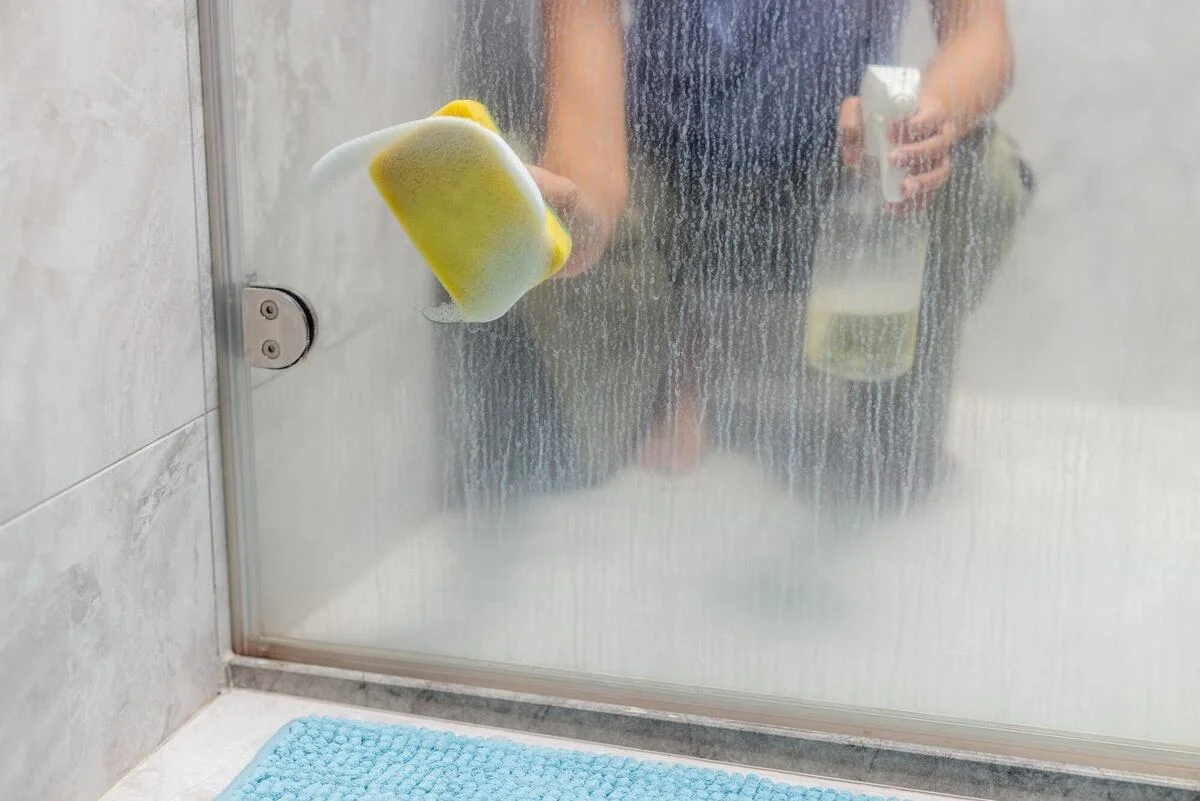
To clean cloudy shower glass, apply a glass-safe cleaner or diluted white vinegar, let it sit for several minutes, then wipe gently with a soft microfibre cloth. Cloudiness is commonly caused by hard water deposits, soap scum, mineral buildup, or cleaning residue. Rinse the glass thoroughly and dry it with a squeegee or clean cloth to prevent fresh water spots.
Cloudy shower glass can make an otherwise clean bathroom look dull and neglected. The problem often develops gradually as water droplets, soap, shampoo, and minerals dry on the glass after each shower.
The good news is that most cloudy shower glass can be restored with the right cleaning method. Instead of scrubbing aggressively, it is usually better to identify the cause of the cloudiness, soften the buildup with an appropriate cleaner, and wipe it away gently.
This guide explains how to clean cloudy shower glass, what causes the cloudy appearance, how to deal with stubborn stains, and how to keep your shower doors clearer for longer.
Why Does Shower Glass Become Cloudy?
Shower glass usually becomes cloudy because residue builds up on its surface over time.
There is rarely one single cause. In many bathrooms, several types of residue combine to create a dull or hazy appearance.
Hard Water Deposits
Hard water contains dissolved minerals such as calcium and magnesium.
When water droplets remain on shower glass and evaporate, some of those minerals stay behind.
At first, they may appear as small white spots. If they are not removed, the deposits gradually build up and create a cloudy layer across the glass.
Soap Scum
Soap scum forms when soap, body oils, and minerals in water combine.
It often creates a whitish or grey film that ordinary water will not easily remove.
Soap scum tends to be particularly noticeable towards the bottom of shower doors, where water and cleaning products accumulate.
Shampoo and Conditioner Residue
Shampoo, conditioner, shower gel, and other personal-care products can splash onto the glass.
If this residue dries repeatedly, it can add to the cloudy appearance.
Cleaning Product Residue
Sometimes the product being used to clean the shower is part of the problem.
Using too much cleaner or failing to rinse the glass properly can leave streaks and residue behind.
Limescale
Limescale is a harder form of mineral buildup that commonly develops in areas with hard water.
If the cloudy shower glass has a rough or chalky feel, limescale may be responsible.
How Do I Clean Cloudy Shower Glass Step by Step?
Most mild to moderate cloudiness can be addressed using a simple cleaning routine.
Step 1: Rinse the Glass With Warm Water
Begin by rinsing the entire glass surface with warm water.
This helps remove loose dirt and softens fresh soap residue.
It also allows you to see which areas are genuinely cloudy rather than simply covered with dried shampoo or surface dirt.
Avoid exposing cold glass to unnecessarily extreme temperature changes. Warm water is sufficient.
Step 2: Apply a Glass-Safe Cleaner
Spray the shower glass with a cleaner that is suitable for glass and compatible with any protective coating on the door.
For ordinary untreated glass, diluted white vinegar is often used to help dissolve mineral deposits.
Another option is a purpose-made shower glass cleaner designed for soap scum and hard water stains.
Apply the solution evenly over the cloudy sections.
Step 3: Let the Cleaner Sit
Do not immediately begin scrubbing.
Allow the cleaner to remain on the glass for several minutes, or for the amount of time specified on the product label.
This gives the cleaning solution time to soften:
- Mineral deposits
- Soap residue
- Limescale
- Water spots
- Greasy film
Giving the product time to work usually reduces the amount of physical scrubbing required.
Step 4: Wipe Gently With a Microfibre Cloth
Use a clean, soft microfibre cloth to wipe the glass.
Work across the cloudy areas with gentle circular movements.
Avoid applying excessive pressure.
If an area remains cloudy after the first pass, apply more cleaner and repeat the process rather than reaching for an abrasive scrubber.
Step 5: Rinse Thoroughly
Rinse the shower glass with clean water.
This removes loosened deposits as well as any remaining cleaning product.
Incomplete rinsing can leave a fresh film behind and make the glass look cloudy again once it dries.
Step 6: Use a Shower Squeegee
Run a clean rubber squeegee from the top of the glass towards the bottom.
Overlap each stroke slightly so that as much water as possible is removed.
Step 7: Dry the Glass
Finish with a clean, dry microfibre cloth.
Drying removes the final water droplets that might otherwise leave new mineral spots.
How to Clean Cloudy Shower Glass With Vinegar
White vinegar is one of the most common household options for cleaning mineral residue from shower glass.
Its acidity can help loosen calcium-based deposits.
For suitable untreated glass, you can mix equal parts white vinegar and water in a spray bottle.
Apply it to the cloudy glass and let it sit briefly before wiping with a soft cloth.
Then rinse and dry thoroughly.
However, vinegar is not suitable for every shower.
Be careful if your bathroom includes:
- Marble
- Limestone
- Travertine
- Other natural stone
- Specialist metal finishes
- Protective shower glass coatings
Acidic cleaners can damage some materials.
If you have coated glass, check the manufacturer’s care instructions first.
How Do You Remove Hard Water Haze From Shower Glass?
Hard water haze is often one of the main reasons glass continues looking cloudy even after ordinary cleaning.
Unlike fresh soap residue, hardened mineral deposits may require more than one treatment.
Apply a suitable glass-safe descaling solution to the affected area.
Allow it enough time to soften the minerals.
Wipe gently with a soft cloth, rinse, and inspect the glass.
If the haze remains, repeat the process.
Avoid trying to remove several months of buildup in one aggressive cleaning session.
Multiple gentle treatments are usually safer for the surface.
How Do You Remove Soap Scum From Cloudy Shower Glass?
Soap scum can create an opaque film across shower doors.
A mild dishwashing liquid mixed with warm water may be enough for lighter buildup.
Apply the solution to the glass and allow it to work for a few minutes.
Then wipe using a non-abrasive sponge or microfibre cloth.
For heavier deposits, a shower cleaner specifically designed to remove soap scum may be more effective.
Always check that the cleaner is suitable for your shower glass.
How to Clean Very Cloudy Shower Glass
If the shower glass has not been thoroughly cleaned for a long time, one treatment may not be enough.
Start with a mild cleaning method first.
Remove as much surface residue as possible, rinse the glass, and assess what remains.
You may find that the glass has several different layers:
- Soap residue on top
- Mineral deposits underneath
- Limescale around the lower edge
- Water spots across the main panel
Treating each type of buildup gradually is more effective than simply scrubbing harder.
A plastic scraper may occasionally help remove softened deposits from suitable glass.
Keep the scraper flat and avoid using excessive pressure.
Never aggressively scrape exposed glass edges.
Can Baking Soda Clean Cloudy Shower Glass?
Baking soda is frequently recommended as a household cleaner because it can help loosen grime.
However, it is mildly abrasive.
That means it should not automatically be the first option when cleaning shower glass, particularly if the door has a specialist surface coating.
If you want to reduce the risk of scratching or dulling the glass, start with a liquid cleaning solution and a soft microfibre cloth.
Abrasive pastes and vigorous scrubbing are usually unnecessary for routine shower glass cleaning.
Can You Use Dish Soap on Cloudy Shower Glass?
Yes, mild dish soap can be useful when the cloudiness is mainly caused by soap scum, body oils, or greasy residue.
Mix a small amount with warm water.
Apply the solution using a soft sponge or cloth and gently clean the glass.
Rinse thoroughly afterwards.
Dish soap is less effective against severe mineral deposits, so hard water stains may require a suitable descaling cleaner.
Why Is My Shower Glass Still Cloudy After Cleaning?
If the glass still looks cloudy after a thorough cleaning, the problem may be more complicated than simple surface residue.
Possible causes include:
- Remaining hard water deposits
- Thick limescale
- Cleaning product residue
- Soap scum
- Damaged protective coating
- Surface etching
- Permanent mineral staining
Try cleaning a small test section carefully.
If the test section becomes clear while the surrounding glass remains cloudy, more cleaning may be required.
If there is little or no improvement after repeated appropriate cleaning, the glass surface itself may have been affected.
What Is Etched Shower Glass?
Mineral deposits can sometimes remain on glass for extended periods.
Over time, the glass surface may develop permanent-looking marks or etching.
Etching is different from ordinary dirt because the surface itself has been affected rather than simply covered by residue.
If the glass remains cloudy regardless of cleaning, professional assessment may help determine whether the issue is buildup, damaged coating, or glass surface deterioration.
Do not attempt aggressive sanding or polishing without understanding the type of shower glass involved.
How to Clean Cloudy Frameless Shower Glass
Frameless shower doors require careful cleaning because the glass edges and hardware are more exposed.
Start with a soft cloth and a glass-safe cleaner.
Pay additional attention to areas around:
- Hinges
- Handles
- Bottom seals
- Brackets
- Door edges
- Water deflectors
Mineral deposits often collect around hardware because water becomes trapped in these areas.
Avoid allowing strong cleaning chemicals to remain on metal components longer than recommended.
If the frameless shower door has become badly stained, damaged, misaligned, or difficult to maintain, M&N Frameless Shower Doors LLC can assist with professional shower glass and enclosure requirements.
How to Clean Cloudy Glass Near the Bottom Shower Seal
The lower edge of a shower door can develop some of the heaviest cloudiness.
Water tends to collect around the bottom seal before evaporating.
Soap and mineral deposits can also become trapped inside or behind the plastic seal.
If your shower door seal is designed to be removable, carefully slide or pull it away from the glass.
Clean the exposed glass with a suitable product.
You can also clean the plastic seal separately.
If the seal is cracked, brittle, permanently discoloured, or no longer gripping the glass properly, replacing it may be more practical.
What Should You Avoid When Cleaning Cloudy Shower Glass?
Using the wrong method can damage the glass, protective coating, seals, or surrounding fittings.
Steel Wool
Avoid using steel wool on shower glass.
It is unnecessarily aggressive and may damage surrounding surfaces.
Rough Scouring Pads
Kitchen scouring pads may scratch coatings or create marks on metal shower fittings.
Use products specifically described as non-abrasive.
Abrasive Cleaning Powders
Powder cleaners may contain particles designed to physically scrub a surface.
These may not be suitable for glass coatings.
Sharp Metal Objects
Avoid knives, screwdrivers, and other sharp tools for scraping shower glass.
They can damage the glass surface or exposed edges.
Mixing Cleaning Products
Never combine different household cleaning chemicals simply to make a stronger cleaner.
Some chemical combinations can create dangerous fumes.
Use one suitable product at a time and follow its instructions.
How to Prevent Shower Glass From Becoming Cloudy
Once you have restored the glass, a simple maintenance routine can prevent the same problem from returning.
Use a Squeegee After Every Shower
This is one of the easiest ways to prevent mineral buildup.
Remove water droplets before they have a chance to dry.
Dry Remaining Water
A quick wipe with a microfibre cloth can remove water left around hinges, seals, and edges.
Clean Weekly
Light weekly cleaning prevents soap and mineral deposits from developing into a thick cloudy film.
Improve Bathroom Ventilation
Run an extractor fan during and after showering when available.
Better ventilation helps moisture evaporate more quickly.
Keep the Bottom Seal Clean
Check the bottom door seal regularly.
Soap, mould, and minerals can collect underneath it.
Address Hard Water
If mineral buildup is severe throughout your home, you may want to investigate appropriate water-treatment options.
A qualified professional can advise whether a water-softening or conditioning system is suitable for your property.
How Often Should Shower Glass Be Cleaned?
There is no single schedule that works for every bathroom.
How quickly shower glass becomes cloudy depends on:
- Water hardness
- Number of people using the shower
- Frequency of use
- Products used
- Bathroom ventilation
- Whether the glass is dried after showering
For many homes, a light weekly clean combined with daily squeegee use is a practical routine.
Hard-water areas may require more frequent maintenance.
Final Thoughts
If you’re wondering how do I clean cloudy shower glass, start by identifying whether the haze is mainly caused by soap scum, hard water, limescale, or cleaning residue.
Apply a suitable glass-safe cleaner, give it enough time to soften the buildup, and wipe gently with a clean microfibre cloth. Avoid abrasive scrubbers and aggressive scraping, particularly on coated glass.
For stubborn cloudiness, several gentle treatments are usually better than one harsh cleaning session. Once the shower glass is clear, regular squeegee use, weekly cleaning, and drying the glass can prevent water spots and mineral deposits from rebuilding.
If repeated cleaning makes little difference, the cloudiness may involve surface etching or deterioration rather than removable residue, in which case professional assessment may be the most practical next step.


