
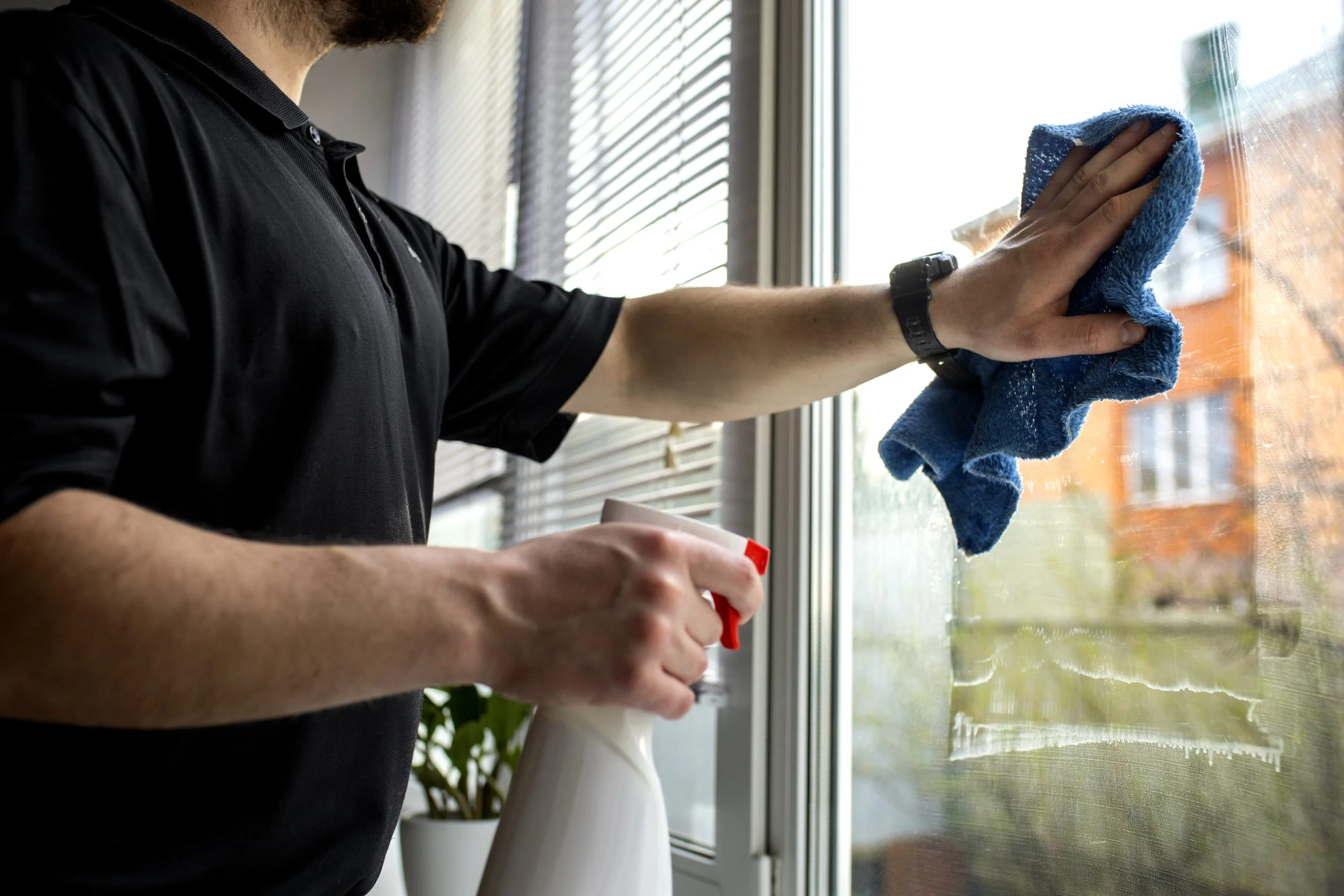
To clean glass shower doors with hard water stains, spray the surface with equal parts warm white vinegar and water, leave it for 10 to 15 minutes, and gently scrub with a nonabrasive sponge or microfiber cloth. Rinse thoroughly and dry with a squeegee. For stubborn mineral buildup, apply a baking soda paste, scrub lightly, and repeat if necessary. Always check the glass manufacturer’s care instructions before using acidic cleaners.
Hard water stains can make even a recently cleaned bathroom look dull and neglected. These cloudy spots, chalky streaks, and crusty deposits develop when mineral-rich water dries on the glass. Regular bathroom cleaners may remove soap and surface dirt, but they often struggle to dissolve the minerals responsible for stubborn staining.
The good news is that most hard water stains can be removed without replacing the glass or using aggressive tools. The right cleaning solution, enough contact time, and a nonabrasive cleaning method can restore much of the glass’s original clarity.
This guide explains how to clean glass shower doors with hard water stains, which cleaning methods work best, what products to avoid, and how to keep mineral deposits from quickly returning.
What Causes Hard Water Stains on Shower Glass?
Hard water contains elevated levels of dissolved minerals. Calcium and magnesium are the most common, although iron, manganese, and other minerals may also be present.
When shower water splashes onto the glass, some of it remains after the shower. The water eventually evaporates, but the dissolved minerals stay behind. Over time, repeated exposure creates visible white spots, cloudy patches, and rough deposits.
Hard water stains become more difficult to remove when they combine with:
- Soap scum
- Shampoo and conditioner residue
- Body oils
- Dirt
- Cleaning product buildup
- Moisture trapped around seals and hardware
Fresh water spots usually sit on the surface and can be removed fairly easily. Older deposits may bond more firmly to the glass. In severe cases, long-term mineral exposure can contribute to etching, which changes the glass surface rather than merely covering it.
How to Identify Hard Water Stains
Before choosing a cleaning method, make sure that mineral buildup is actually the problem. Different types of bathroom residue may require different treatment.
Hard water stains commonly appear as:
- White or gray circular spots
- Milky streaks
- Chalky residue
- Rough patches
- Hazy areas that remain after normal cleaning
- Crusty deposits near the bottom of the door
- Buildup around hinges, handles, and seals
Soap scum, by comparison, often feels greasy or waxy. Mold usually appears as black, green, or pink discoloration around seals, grout, and damp corners.
Try wiping a small area with a damp microfiber cloth. If ordinary wiping does not remove the cloudy marks, mineral deposits are likely present.
Supplies You Will Need
Gathering the right supplies before starting makes the process easier and protects the glass from accidental damage.
Useful cleaning supplies include:
- White distilled vinegar
- Warm water
- Dish soap
- Baking soda
- A clean spray bottle
- Microfiber cloths
- A nonabrasive sponge
- A plastic bowl or container
- A shower squeegee
- Rubber cleaning gloves
- An old soft toothbrush
- Clean towels
For particularly stubborn buildup, you may need a commercial hard water stain remover designed specifically for shower glass.
Avoid steel wool, metal scrapers, rough scouring pads, and highly abrasive powders. These tools can leave permanent scratches.
Check the Manufacturer’s Instructions First
Some shower doors have factory-applied protective coatings that reduce spotting and make the glass easier to clean. Strong acidic or abrasive products may damage certain coatings.
Before applying vinegar, baking soda, or a commercial cleaner, check the shower door manufacturer’s care instructions. If those instructions are unavailable, test the cleaner on a small and inconspicuous area.
You should also avoid allowing acidic cleaners to remain on natural stone, metal finishes, or sensitive bathroom surfaces. Vinegar can damage materials such as marble, travertine, limestone, and some metal coatings.
Step-by-Step Method for Cleaning Hard Water Stains
1. Ventilate the Bathroom
Open a window or turn on the exhaust fan before cleaning. Proper ventilation reduces exposure to strong odors and helps the shower enclosure dry more quickly.
Remove shampoo bottles, soaps, razors, and other items from the shower area. Place a towel outside the enclosure to catch water and cleaning solution.
2. Rinse the Glass With Warm Water
Rinse the shower door with warm water to loosen surface dirt and soften soap residue. Warm water also helps prepare the mineral deposits for cleaning.
Do not use extremely hot water on cold glass. Sudden temperature changes can place unnecessary stress on the surface.
3. Prepare a Vinegar Cleaning Solution
Mix equal amounts of warm water and white distilled vinegar in a clean spray bottle.
For example, combine:
- One cup of warm water
- One cup of white vinegar
A few drops of mild dish soap can be added when the glass also has heavy soap scum. Dish soap helps break down oily residue that may be covering the mineral deposits.
Gently swirl the bottle instead of shaking it aggressively, as too much movement can create excessive foam.
4. Spray the Entire Glass Surface
Apply the solution generously to the inside of the shower door. Concentrate on cloudy sections, corners, edges, and areas near the bottom.
Leave the solution on the glass for approximately 10 to 15 minutes. This contact time allows the vinegar to start dissolving the mineral buildup.
Do not let the solution dry completely. If it begins drying too quickly, spray the glass again.
5. Scrub With a Nonabrasive Sponge
Use a soft sponge or microfiber cloth to scrub the glass in small circular motions. Apply gentle, even pressure rather than forcefully scraping the surface.
Pay particular attention to:
- Overlapping door panels
- The lower edge of the glass
- Areas around the handle
- Hinges and brackets
- Door tracks
- Rubber or plastic seals
Use a soft toothbrush to clean narrow spaces around hardware. Avoid scrubbing polished metal finishes with baking soda or abrasive tools.
6. Rinse the Glass Thoroughly
Rinse the door with clean, warm water. Make sure all vinegar, soap, and loosened mineral residue are removed.
Cleaning solution left on the glass can dry into new streaks, so rinse more thoroughly than you think is necessary.
7. Dry With a Squeegee and Microfiber Cloth
Use a shower squeegee from the top of the glass downward. Wipe the squeegee blade after each pass to prevent dirty water from being spread across the door.
Finish by drying the edges, hardware, and remaining damp areas with a clean microfiber cloth. Drying is essential because allowing mineral-rich rinse water to evaporate can create new spots almost immediately.
Removing Stubborn Hard Water Stains With Baking Soda
If the vinegar solution removes surface haze but leaves behind visible spots, baking soda may help lift the remaining deposits.
Prepare the Paste
Mix baking soda with a small amount of water until it forms a spreadable paste. It should be thick enough to remain on the glass without running.
Apply It Carefully
Place the paste directly on the stained areas. Let it sit for approximately five minutes, but do not allow it to become completely dry and hardened.
Scrub Gently
Use a damp microfiber cloth or nonabrasive sponge to work the paste over the stains. Use light circular movements and avoid excessive pressure.
Although baking soda is milder than many commercial abrasives, it can still affect certain coatings or finishes. Test it on a hidden area first.
Rinse and Inspect
Rinse the glass thoroughly and dry it. Inspect the surface from different angles and under good lighting.
Repeat the treatment if the stains have improved but are still visible. Several gentle treatments are safer than one aggressive scrubbing session.
Using Vinegar-Soaked Towels for Thick Mineral Deposits
Vertical shower doors create a practical problem: cleaning products can slide down before they have enough time to work.
For concentrated stains, soak paper towels or thin cloths in the diluted vinegar solution. Press them against the affected glass so they remain in contact with the deposits.
Leave them in place for 10 to 15 minutes. Remove the towels, lightly scrub the area, rinse it, and dry it completely.
Do not use this method near natural stone, sensitive metal hardware, or surfaces that may be damaged by vinegar.
Cleaning Door Tracks, Seals, and Hardware
Clear glass will still look untidy if the surrounding components are covered with residue.
Shower Door Tracks
Tracks can collect standing water, mineral deposits, soap, and dirt. Apply a suitable cleaner and allow it to loosen the buildup. Use a soft toothbrush or cotton swab to reach narrow corners.
Remove the dirty solution with paper towels or a microfiber cloth. Rinse carefully without flooding the track, then dry it thoroughly.
Door Seals
Wipe seals with warm water and mild dish soap. Check for residue trapped underneath removable seals, but only remove them if the manufacturer allows it.
Replace cracked, loose, or permanently discolored seals when cleaning no longer improves their condition.
Handles and Hinges
Use mild soap and water on hardware unless the manufacturer recommends another cleaner. Strong acids and abrasive powders may damage plated, painted, brushed, or polished finishes.
Apply the cleaning product to a cloth rather than spraying it directly into hinges or mounting points.
When to Use a Commercial Hard Water Stain Remover
Household methods work well for many water spots, but old or heavy deposits may need a purpose-made product.
Choose a cleaner that clearly states it is suitable for glass shower doors. Read the instructions carefully because application times and safety requirements vary.
Before using the product:
- Confirm that it is compatible with coated glass
- Protect nearby stone and metal surfaces
- Wear gloves
- Ventilate the room
- Test it on a discreet area
- Follow the recommended contact time
- Rinse the surface completely
Never assume that a stronger product should remain on the glass longer. Exceeding the manufacturer’s instructions can damage coatings or surrounding materials.
Cleaning Products and Tools to Avoid
Using the wrong products can turn a removable stain into permanent damage.
Avoid the following:
Steel Wool and Metal Scrapers
These can scratch the glass and damage hardware. Scratches collect residue and make future cleaning more difficult.
Rough Scouring Pads
Heavy-duty kitchen pads may leave fine scratches, even if the damage is not immediately visible.
Undiluted Strong Acids
Highly concentrated acids can create safety hazards and damage metal, stone, seals, and protective coatings.
Chlorine Bleach for Mineral Removal
Bleach may help with certain organic stains, but it does not effectively dissolve calcium deposits. More importantly, never mix bleach with vinegar or any acidic cleaner, as this can release dangerous chlorine gas.
Random Cleaner Combinations
Combining products does not automatically improve cleaning power. Different chemicals can react unpredictably and create harmful fumes.
Razor Blades
A blade can scratch coated or tempered glass, especially when held at the wrong angle or used over trapped grit. It is safer to choose a glass-compatible chemical treatment and a nonabrasive cloth.
Hard Water Buildup Versus Permanent Glass Etching
Sometimes a shower door remains cloudy after several careful treatments. This does not always mean the cleaner failed.
Mineral deposits that remain on glass for an extended period can gradually affect the surface. Once the glass becomes etched, the cloudy appearance is within the surface rather than sitting on top of it.
Signs of possible etching include:
- Haze that does not change after cleaning
- Roughness that remains after deposits are removed
- Permanent dull patches
- Marks that are visible from every angle
- A difference in clarity between protected and exposed areas
Severe etching may require professional glass restoration. If restoration cannot achieve a satisfactory result, glass replacement may be the most practical option.
For specialist guidance on damaged or heavily stained shower glass, M&N Frameless Shower Doors LLC can assess whether cleaning, restoration, hardware servicing, or replacement is the appropriate solution.
How Often Should Shower Glass Be Cleaned?
The ideal schedule depends on water hardness, shower usage, ventilation, and whether the glass has a protective coating.
A practical routine is:
- Use a squeegee after every shower
- Wipe wet edges and hardware daily
- Perform a light clean once a week
- Carry out a deeper mineral-removal treatment once or twice a month
- Inspect tracks and seals monthly
Homes with very hard water may need more frequent cleaning. Consistency matters more than aggressive scrubbing.
How to Prevent Hard Water Stains From Returning
Removing existing stains solves only half the problem. Preventing water from drying on the glass is the most effective long-term strategy.
Squeegee After Every Shower
A squeegee removes much of the water before evaporation can leave minerals behind. It takes less than a minute and can significantly reduce buildup.
Start at the top and pull the blade downward in overlapping passes. Wipe the blade between strokes.
Dry the Edges and Hardware
Water often collects around brackets, handles, seals, and the bottom of the door. Use a microfiber cloth to dry these areas after using the squeegee.
Improve Bathroom Ventilation
Run the exhaust fan during the shower and leave it operating afterward. If practical, leave the shower door open so moisture can escape.
Better ventilation helps the enclosure dry faster and also discourages mildew growth.
Use a Daily Shower Spray
A glass-safe daily spray can prevent soap and minerals from bonding firmly to the surface. Confirm that the product is suitable for coated glass and nearby materials.
Consider a Protective Glass Treatment
Some glass treatments create a water-repellent surface that makes it harder for minerals and soap to stick. These treatments do not make the shower maintenance-free, but they can simplify routine cleaning.
Address the Water Supply
A water softening system may reduce calcium and magnesium levels throughout the home. This can lower mineral buildup on shower glass, faucets, fixtures, and appliances.
A water conditioner may change how minerals behave without removing them completely. Speak with a qualified water treatment specialist to understand which option is suitable for your household.
Common Mistakes That Make Hard Water Stains Worse
Waiting Until the Glass Looks Cloudy
Visible haze usually means multiple layers have already developed. Frequent light cleaning requires less effort and is gentler on the glass.
Scrubbing Too Aggressively
More pressure does not always produce better results. It may scratch the surface or damage a protective coating.
Letting Cleaner Dry on the Glass
A cleaning solution that dries before rinsing can leave streaks and residue. Work in manageable sections if the enclosure is large.
Ignoring the Bottom Edge
Water collects at the bottom of the door, making this one of the first areas to develop heavy buildup.
Reusing Dirty Cloths
A cloth containing grit or dried mineral particles may scratch the glass. Use clean microfiber cloths and wash them after each use.
Skipping the Final Drying Step
Rinsing removes the cleaner, but drying prevents the rinse water from leaving fresh mineral spots.
Final Thoughts
Learning how to clean glass shower doors with hard water stains is mainly about choosing the correct treatment and giving it enough time to work. Diluted vinegar can dissolve many mineral deposits, while baking soda may help with more persistent spots. Commercial glass-safe cleaners are useful when household methods are not strong enough.
Gentle cleaning is important. Abrasive pads, metal tools, and uncontrolled chemical combinations can permanently damage glass, coatings, hardware, and surrounding surfaces.
Once the door is clean, regular prevention will save the most time. Squeegee the glass after each shower, dry areas where water collects, improve ventilation, and clean lightly before thick mineral layers develop. A simple routine can keep the enclosure clearer while reducing the need for difficult deep cleaning.


