
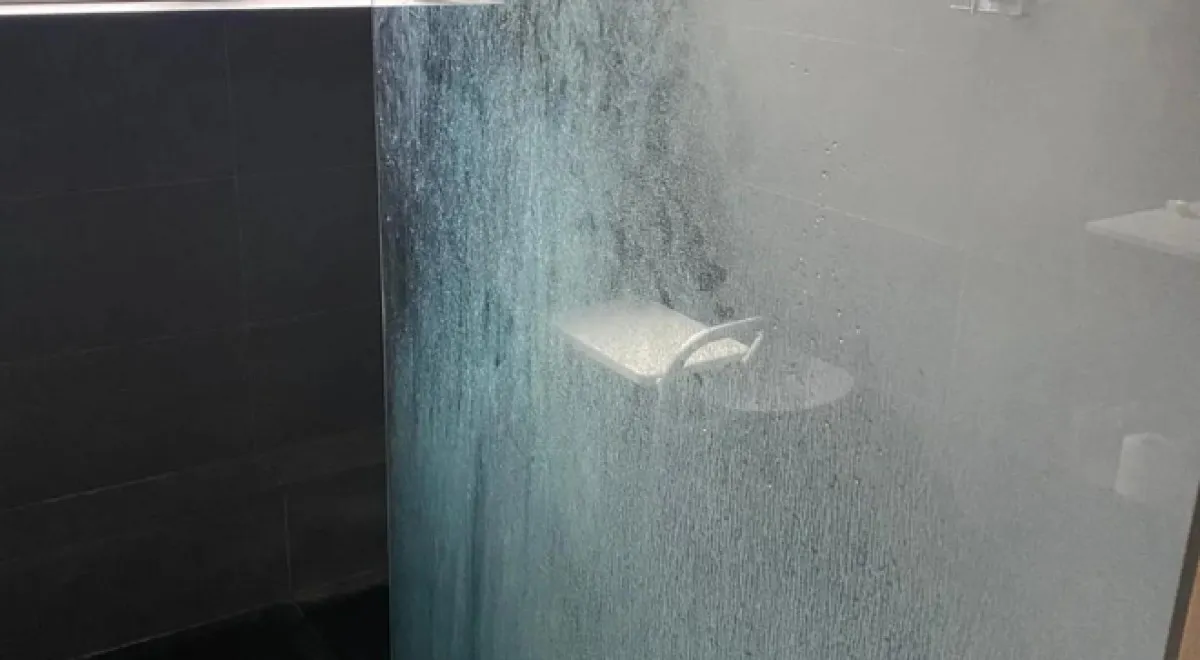
To remove limescale from shower glass, apply a glass-safe descaling solution or diluted white vinegar, allow it to loosen the mineral deposits, then wipe gently with a soft microfibre cloth. Avoid abrasive pads, harsh scraping, and excessive pressure that may damage the glass or protective coating. For heavy limescale, repeat the treatment rather than scrubbing aggressively.
Limescale can make an otherwise clean shower look cloudy, dull, and poorly maintained. Those white, chalky marks usually develop gradually, which means many homeowners do not notice how much buildup has formed until ordinary glass cleaner stops working.
Fortunately, most surface limescale can be removed with the right products and a little patience. The key is to dissolve or soften the mineral deposits before wiping them away rather than trying to scrub them off by force.
This guide explains how to remove limescale from shower glass, which cleaning methods are suitable, what you should avoid, and how to prevent stubborn mineral deposits from returning.
What Is Limescale on Shower Glass?
Limescale is a hard mineral deposit that forms when water containing dissolved minerals evaporates.
Calcium and magnesium are commonly associated with hard water. When shower water dries on the glass, some of these minerals can remain behind.
At first, the deposits may appear as small white water spots. Over time, repeated exposure creates thicker layers that make the shower glass look cloudy or frosted.
Limescale can develop on:
- Glass shower doors
- Frameless shower screens
- Shower enclosures
- Shower handles
- Metal fittings
- Showerheads
- Taps
- Tiles
- Bottom shower seals
The longer the deposits remain, the more difficult they can become to remove.
Why Does Limescale Build Up on Shower Glass?
Shower glass is particularly vulnerable because it is constantly exposed to water.
After every shower, small droplets may remain across the surface. When those droplets evaporate, minerals are left behind.
Several factors can make the problem worse.
Hard Water
Homes in hard-water areas often experience faster mineral buildup.
The greater the mineral content in the water, the more residue may be left after droplets dry.
Not Drying the Glass
Allowing water to naturally dry on the shower door gives minerals an opportunity to remain on the surface.
Regular use of a squeegee can significantly reduce this buildup.
Infrequent Cleaning
Light deposits are usually much easier to remove than thick, hardened limescale.
Leaving shower glass uncleaned for long periods allows multiple layers of mineral residue, soap, and body-product deposits to accumulate.
Soap and Shampoo Residue
Limescale often mixes with soap scum.
This combination can create a stubborn cloudy film that may be harder to remove than mineral deposits alone.
What Do You Need to Remove Limescale From Shower Glass?
You do not usually need specialist equipment for light or moderate limescale.
Useful items include:
- Clean microfibre cloths
- Soft non-abrasive sponge
- Spray bottle
- Warm water
- White vinegar
- Mild dishwashing liquid
- Glass-safe limescale remover
- Plastic scraper
- Shower squeegee
- Clean towel
Always check the manufacturer’s instructions for your shower glass before applying strong cleaners.
Some shower doors have specialist protective coatings that may require particular cleaning products.
How Do You Remove Limescale From Shower Glass Step by Step?
The following method works well for many ordinary glass shower doors.
Step 1: Rinse the Shower Glass
Start by rinsing the surface with warm water.
This removes loose soap, shampoo, dust, and surface dirt.
It can also slightly soften fresh deposits and helps you see which areas have the heaviest limescale buildup.
Step 2: Apply a Suitable Limescale Cleaner
Apply either a manufacturer-approved glass descaler or another appropriate cleaning solution.
For untreated glass, diluted white vinegar is commonly used because its acidity can help dissolve calcium-based mineral deposits.
Spray the cleaner across the affected areas rather than only targeting individual spots.
Step 3: Allow the Cleaner to Work
This is one of the most important steps.
Do not spray the solution and immediately begin scrubbing.
Give the cleaner time to loosen the mineral buildup. Depending on the product, this may only require several minutes.
Always follow the dwell-time instructions on commercial cleaning products.
Allowing the cleaner to work chemically means you should need less physical scrubbing.
Step 4: Wipe With a Microfibre Cloth
Use a clean microfibre cloth to gently work over the affected areas.
Circular motions can help lift softened deposits.
If you encounter a stubborn patch, add more cleaning solution rather than immediately applying more force.
Step 5: Rinse Thoroughly
Rinse the glass with clean water once the deposits have been loosened.
It is important to remove both the dissolved minerals and the cleaning product.
Leaving cleaner residue on the glass may create streaks or dull patches when it dries.
Step 6: Dry the Glass
Use a shower squeegee to remove most of the water.
Finish with a clean, dry microfibre cloth.
Drying the glass helps prevent a fresh layer of mineral spots from developing immediately after cleaning.
Can You Use White Vinegar to Remove Limescale From Shower Glass?
White vinegar is one of the most commonly used household solutions for mineral deposits.
Its mild acidity can help break down calcium-based residue.
A simple method is to mix equal quantities of white vinegar and water in a spray bottle.
Spray the affected shower glass, allow the mixture to sit briefly, then wipe with a soft cloth.
However, vinegar is not suitable for every bathroom surface.
Take care around:
- Marble
- Limestone
- Travertine
- Certain natural stone
- Some metal finishes
- Special glass coatings
Acidic cleaners can damage acid-sensitive surfaces.
If your shower glass has a protective coating, check the manufacturer’s cleaning guidance before applying vinegar.
How to Remove Heavy Limescale From Shower Glass
Heavy deposits may need more than one treatment.
If the glass has not been cleaned for a long time, you may see thick white patches or an almost opaque layer near the bottom of the shower door.
Start with the same gentle process.
Apply the descaling solution, give it time to work, wipe gently, rinse, and assess the results.
If deposits remain, repeat the process.
Multiple gentle treatments are generally preferable to one aggressive scrubbing session.
For stubborn isolated spots, a plastic scraper may sometimes help lift softened deposits.
Keep the scraper flat against the surface and use very little pressure.
Avoid attacking the glass with screwdrivers, knives, or other sharp metal objects.
How to Remove Limescale From the Bottom of a Shower Door
The lower section of a glass shower door often has the worst buildup.
Water repeatedly collects there before evaporating.
Bottom seals can also trap moisture, soap, and mineral residue.
If your shower seal is removable, carefully slide or pull it away from the glass according to its design.
Once removed, you can clean the lower glass more thoroughly.
Spray the affected area with a suitable limescale cleaner and allow it to work before wiping.
Also clean the seal separately if you plan to reuse it.
If the seal has become yellow, brittle, cracked, or heavily contaminated, replacement may be more practical.
Can Baking Soda Remove Limescale From Shower Glass?
Baking soda is frequently mentioned in home-cleaning advice because it can help remove residue.
However, baking soda is mildly abrasive.
For shower glass, particularly glass with a protective coating, non-abrasive cleaning methods are usually the safer starting point.
If your goal is to remove limescale without risking scratches, a liquid descaling solution combined with a soft cloth is generally a better choice.
Avoid vigorously rubbing dry baking soda across shower glass.
Does Lemon Juice Remove Limescale?
Lemon juice contains citric acid, which can help break down mineral deposits.
However, similar precautions apply as with vinegar.
Acidic products should be kept away from acid-sensitive natural stone and certain surface finishes.
A commercial glass-safe limescale remover may provide more predictable instructions and concentration levels.
What Is the Best Limescale Remover for Shower Glass?
There is no single product that is best for every shower.
The safest choice depends on:
- Whether the glass is coated
- How severe the limescale is
- Surrounding materials
- Manufacturer recommendations
- How frequently the glass is cleaned
For light buildup, a mild household cleaning solution may be sufficient.
For heavier deposits, a purpose-made bathroom limescale remover labelled as suitable for glass can be more effective.
Always read the label before use.
Pay particular attention to whether the product is compatible with nearby metal hardware, stone, tiles, seals, and coatings.
What Should You Avoid When Removing Limescale?
Trying to remove stubborn limescale too aggressively can create a bigger problem than the mineral deposits themselves.
Steel Wool
Avoid steel wool on shower glass.
It can damage surfaces and may leave small metal fragments behind.
Harsh Scouring Pads
Rough scouring pads designed for cookware should not automatically be used on shower glass.
They may damage protective coatings and surrounding fixtures.
Sharp Metal Tools
Avoid using knives, screwdrivers, or other sharp tools to scrape away mineral deposits.
Glass edges are particularly vulnerable to damage.
Abrasive Powders
Powder cleaners may contain abrasive particles.
If the goal is to maintain smooth, clear shower glass, chemical loosening followed by gentle wiping is normally safer.
Mixing Cleaning Chemicals
Do not combine multiple household cleaners in an attempt to create a stronger solution.
Certain cleaning chemicals can react dangerously when mixed.
Use one appropriate product at a time and follow the instructions provided.
How to Remove Limescale Without Scratching Shower Glass
The safest technique is simple: let the cleaner do most of the work.
Instead of applying more pressure when stains remain, increase the contact time if the product instructions allow it or repeat the cleaning process.
Use only:
- Clean microfibre cloths
- Soft non-abrasive sponges
- Suitable liquid cleaners
- Plastic scrapers where appropriate
Also inspect your cleaning cloth before use.
Even a soft cloth can cause surface marks if sand, grit, or other hard particles are trapped inside it.
What If the Shower Glass Still Looks Cloudy After Removing Limescale?
Sometimes cloudiness remains even after mineral deposits have been cleaned.
There may be several reasons.
The glass could still have:
- Soap scum
- Cleaning residue
- Remaining mineral deposits
- Surface etching
- Damaged protective coating
- Permanent staining
Try cleaning a small section carefully and comparing it with the surrounding glass.
If repeated appropriate cleaning does not improve the surface, the problem may not be removable dirt.
Long-term mineral exposure can sometimes affect the glass surface itself.
Can Limescale Damage Shower Glass?
Light mineral deposits are mainly a cosmetic issue.
However, allowing heavy deposits to remain for extended periods can make cleaning significantly more difficult.
Minerals can also accumulate around:
- Hinges
- Handles
- Seals
- Brackets
- Tracks
Buildup around moving hardware can interfere with appearance and maintenance.
Regular cleaning helps prevent these deposits from becoming deeply established.
For professional assistance with frameless shower glass, enclosure maintenance, and related shower door requirements, M&N Frameless Shower Doors LLC can help when ordinary cleaning is no longer enough.
How to Prevent Limescale on Shower Glass
Prevention is considerably easier than removing heavy buildup.
Use a Squeegee After Every Shower
A squeegee removes much of the water before it can evaporate.
Run it from the top of the glass towards the bottom after each shower.
This simple habit can dramatically reduce visible water spots.
Dry the Glass
If you want to go one step further, wipe remaining droplets with a clean microfibre cloth.
Clean the Glass Regularly
Do not wait until the glass becomes completely cloudy.
Light weekly cleaning prevents mineral deposits from building into stubborn layers.
Improve Bathroom Ventilation
Good ventilation helps shower surfaces dry more quickly.
Use an extractor fan where available and allow air to circulate after showering.
Keep Shower Hardware Clean
Wipe water from hinges, handles, brackets, and seals as well as the main glass panel.
Mineral buildup can form on these areas too.
Consider Water Treatment
Homes with particularly hard water may benefit from investigating appropriate water-treatment options.
However, this is a larger household decision and should be based on water quality, plumbing requirements, and professional advice.
How Often Should You Remove Limescale From Shower Glass?
The ideal cleaning frequency depends largely on local water hardness and shower usage.
In a hard-water area, visible spots may develop within days.
A practical routine is:
- Squeegee after each shower
- Lightly clean the glass weekly
- Address visible mineral deposits promptly
- Deep-clean when necessary
Removing small amounts of limescale regularly is far easier than tackling months of accumulated deposits.
Final Thoughts
So, how do you remove limescale from shower glass? The safest approach is to soften the mineral deposits using a suitable glass-safe descaling solution, wipe them gently with a microfibre cloth, rinse thoroughly, and dry the glass afterwards.
For tougher deposits, repeat the treatment instead of reaching for abrasive pads or sharp scraping tools. White vinegar can be useful on suitable untreated glass, but always consider protective coatings and surrounding stone or metal surfaces before using acidic products.
Once the glass is clean, prevention makes the biggest difference. Using a squeegee after every shower and carrying out regular light cleaning can stop water spots from turning into stubborn limescale, keeping the glass clearer and easier to maintain.


