
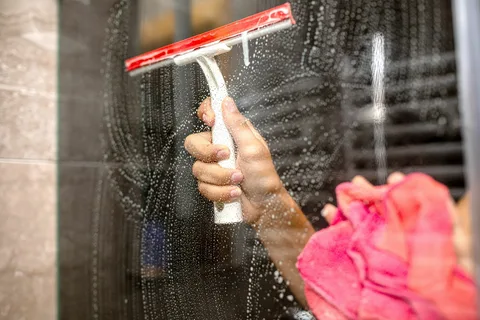
To clean shower glass without scratching it, use a soft microfibre cloth or non-abrasive sponge with warm water and a mild glass-safe cleaner. Avoid steel wool, abrasive powders, rough scrubbers, and aggressive scraping tools that can damage the glass surface. For stubborn soap scum or hard water stains, allow the cleaning solution to sit briefly before wiping gently rather than scrubbing harder.
Clean, clear shower glass can make an entire bathroom look brighter and more polished. Unfortunately, regular exposure to water, soap, shampoo, body oils, and minerals can leave the glass cloudy, streaked, or covered in stubborn deposits.
The temptation is often to scrub harder when these marks refuse to disappear. That is where problems can begin.
Although shower glass is durable, using abrasive products or unsuitable cleaning tools may damage coatings, leave visible marks, or scratch surrounding metal and decorative surfaces. The safer approach is to soften the buildup first and remove it using gentle cleaning methods.
This guide explains how to clean shower glass without scratching it, what products and tools to use, what to avoid, and how to keep your shower glass clearer for longer.
Why Does Shower Glass Get Dirty So Quickly?
Shower glass is exposed to water and cleaning-product residue almost every day.
Common causes of cloudy or dirty shower glass include:
- Hard water deposits
- Soap scum
- Shampoo and conditioner residue
- Body oils
- Mineral buildup
- Limescale
- Water spots
- Mildew around seals
- Poor ventilation
The exact type of buildup matters because different stains may need slightly different cleaning methods.
For example, ordinary soap residue may wipe away fairly easily, while mineral deposits caused by hard water can become much more stubborn if they are left on the glass for weeks or months.
What Should You Use to Clean Shower Glass?
The safest cleaning setup is usually very simple.
You may need:
- Microfibre cloths
- A soft non-abrasive sponge
- Warm water
- Mild dish soap
- Glass-safe bathroom cleaner
- White vinegar, where suitable
- Spray bottle
- Shower squeegee
- Clean dry towel
Always check whether your shower glass has a special protective or water-repellent coating before using stronger cleaning products.
Some coated glass manufacturers recommend specific cleaning solutions and warn against acidic, alkaline, or abrasive products.
How to Clean Shower Glass Without Scratching It Step by Step
Cleaning shower glass properly is more about technique than force.
Step 1: Rinse the Glass With Warm Water
Start by rinsing the glass with warm water.
This helps loosen surface dirt, soap residue, and fresh mineral deposits.
Warm water can also soften some buildup, making it easier for the cleaning product to work.
Avoid using extremely hot water directly on cold glass because sudden temperature changes are unnecessary and may place stress on glass surfaces.
Step 2: Apply a Mild Cleaning Solution
Spray a glass-safe cleaning solution evenly over the shower screen or door.
For everyday cleaning, mild dish soap diluted in warm water may be enough.
Apply the solution particularly well to areas where you can see:
- White marks
- Cloudiness
- Soap residue
- Water spots
- Limescale
Letting the cleaner sit for a few minutes can be more effective than immediately scrubbing the glass.
The cleaner needs time to break down the residue.
Step 3: Use a Soft Microfibre Cloth
Gently wipe the glass using a clean microfibre cloth.
Microfibre is useful because it can lift dirt and residue without the aggressive surface of abrasive scrubbers.
Use light, overlapping circular movements on stubborn areas.
Do not apply excessive pressure.
If the stain remains, apply more cleaning solution and allow additional contact time rather than immediately reaching for a rougher tool.
Step 4: Rinse the Shower Glass Thoroughly
Once the residue has been loosened, rinse the glass with clean water.
Make sure no soap or cleaning product remains.
Cleaning residue left on the glass can dry into streaks or cloudy patches, making the shower look dirty again almost immediately.
Step 5: Use a Squeegee
Run a clean rubber squeegee down the glass from top to bottom.
Overlap each stroke slightly.
This removes much of the remaining water and helps prevent new water spots from developing.
Step 6: Dry With a Clean Microfibre Cloth
Finish by wiping the glass with a clean, dry microfibre cloth.
This helps remove remaining moisture and reduces streaks.
At this point, the shower glass should look noticeably clearer without requiring aggressive scrubbing.
How to Remove Hard Water Stains From Shower Glass Without Scratching It
Hard water stains are among the most common problems on shower glass.
Hard water contains dissolved minerals. When water droplets evaporate, minerals can remain behind on the glass.
Over time, these deposits can create a cloudy white or chalky appearance.
A mild acidic solution, such as diluted white vinegar, is commonly used to help break down mineral deposits on ordinary untreated glass.
You can:
- Mix white vinegar with water in a spray bottle.
- Spray the affected glass.
- Allow it to sit briefly.
- Wipe gently with a microfibre cloth.
- Rinse thoroughly.
- Dry the glass.
However, check the shower glass manufacturer’s cleaning instructions first, particularly if your shower door has a protective coating.
Vinegar is acidic and may not be recommended for every type of treated surface or surrounding bathroom material.
How to Remove Soap Scum From Shower Glass
Soap scum develops when soap residue combines with minerals in water.
It can create a dull, cloudy film that ordinary water alone will not remove.
A mild dish-soap solution can be effective for relatively fresh soap buildup.
Apply the solution generously and allow it to sit for several minutes.
Then gently wipe the glass using a soft sponge or microfibre cloth.
For heavier buildup, you may need to repeat the process several times.
Repeated gentle cleaning is safer than attacking the glass with a highly abrasive pad.
Can You Use Vinegar to Clean Shower Glass?
Vinegar can be useful for mineral deposits and water spots, but it should not automatically be used on every shower enclosure.
Standard glass may tolerate diluted vinegar well, but some shower doors have specialist coatings intended to reduce water spotting and make maintenance easier.
Strong acidic cleaners may affect certain coatings.
Vinegar can also damage or dull some natural stone surfaces surrounding a shower.
If your shower is installed next to marble, limestone, travertine, or another acid-sensitive stone, take extra care to prevent vinegar from contacting those surfaces.
When uncertain, use a manufacturer-approved glass cleaner.
Can You Use Baking Soda on Shower Glass?
Baking soda is frequently recommended as a household cleaner, but it is mildly abrasive.
That does not automatically mean it will scratch every shower door, but abrasive cleaning methods are unnecessary when safer alternatives are available.
If the main goal is to clean shower glass without scratching it, starting with non-abrasive liquid cleaners and soft cloths is the more cautious approach.
Avoid aggressive scrubbing with baking soda pastes, especially on coated glass.
What Should You Never Use on Shower Glass?
The easiest way to prevent scratches is to avoid unsuitable tools.
Steel Wool
Steel wool is far too aggressive for routine shower glass cleaning.
It can also damage metal fittings and leave particles behind that may rust.
Abrasive Scouring Pads
Rough kitchen scourers may leave marks on glass coatings, frames, seals, and hardware.
Use a sponge specifically described as non-scratch or non-abrasive.
Abrasive Cleaning Powders
Powder cleaners may contain particles designed to scrub surfaces physically.
Those particles can be unnecessary for shower glass and may harm specialist surface treatments.
Sandpaper
Never use sandpaper to clean shower glass.
Even extremely fine abrasive paper can permanently alter the surface.
Dirty Cleaning Cloths
A microfibre cloth is only gentle if it is clean.
Small particles of grit, sand, or debris trapped in a cloth can scratch surfaces while you wipe them.
Always use a fresh, clean cloth.
Metal Scrapers
Avoid casually using knives, metal scrapers, or razor blades on shower glass.
Professional glass cleaners sometimes use specialised blades on suitable untreated glass, but incorrect blade angle, contaminated glass, coatings, or debris can create damage.
For normal home cleaning, a plastic scraper is the safer option for stubborn residue.
How to Clean the Bottom of a Glass Shower Door
The lower part of a shower door often gets dirtier than the rest of the glass.
This area is exposed to:
- Standing water
- Soap
- Shampoo
- Hard water
- Dirt
- Mould
- Residue from shower seals
Start by opening the door and checking whether the bottom seal can be removed.
Some shower door bottom seals simply slide or pull off.
If removable, cleaning the seal separately allows you to reach the lower glass edge properly.
Use a soft cloth and mild cleaner to clean around the bottom of the glass.
Avoid pushing hard tools against exposed glass edges because edges are more vulnerable to damage than the main flat surface.
How to Clean Frameless Shower Glass Safely
Frameless showers create a clean, modern appearance, but their exposed glass edges and minimal hardware require sensible cleaning.
When cleaning a frameless shower door:
- Support the door if cleaning near hinges.
- Avoid knocking the glass with cleaning equipment.
- Do not place heavy objects against the door.
- Clean around hinges gently.
- Avoid soaking hardware unnecessarily.
- Use manufacturer-approved products where coatings are present.
The glass itself may be strong, but careful maintenance also protects hinges, seals, handles, and other fittings.
For professional assistance with glass shower enclosures and related services, M&N Frameless Shower Doors LLC can help homeowners maintain the appearance and function of their shower installations.
How to Prevent Water Spots on Shower Glass
Preventing buildup is easier than removing months of hardened deposits.
One of the simplest habits is using a shower squeegee after every shower.
It takes less than a minute and removes much of the water that would otherwise evaporate on the glass.
You can also:
- Dry the glass after showering.
- Improve bathroom ventilation.
- Keep shower seals clean.
- Clean the glass weekly.
- Avoid allowing soap residue to build up.
- Repair leaking showerheads.
- Use suitable water-repellent products if recommended for your glass.
Frequent light maintenance usually means less aggressive cleaning is required later.
How Often Should You Clean Shower Glass?
For the easiest maintenance, lightly clean shower glass around once a week, depending on how frequently the shower is used and the hardness of your water.
A squeegee can be used after each shower.
If you live in an area with very hard water, visible water spots may appear more quickly.
Frequent removal prevents mineral deposits from becoming thick and difficult to clean.
Why Does Shower Glass Still Look Cloudy After Cleaning?
If the glass remains cloudy after normal cleaning, several things may be happening.
The surface may have:
- Heavy mineral buildup
- Persistent soap scum
- Cleaning-product residue
- Damaged protective coating
- Surface etching
- Deposits that have been present for a long time
Try repeating the gentle cleaning process before using anything more aggressive.
If the cloudiness does not improve after appropriate cleaning, the issue may no longer be simple surface dirt.
Can Scratched Shower Glass Be Repaired?
Very light surface marks may sometimes be polished professionally, depending on the depth, location, and type of glass.
Deep scratches, chips, or damage near glass edges require more caution.
Do not attempt aggressive DIY grinding or polishing on a shower door.
Shower enclosures frequently use safety glass, and improper treatment can weaken or damage the panel.
If a scratch is significant, having the glass assessed professionally is the safest approach.
Final Thoughts
Knowing how to clean shower glass without scratching it comes down to using gentle tools, suitable cleaning solutions, and enough time for the cleaner to break down residue.
Use clean microfibre cloths, non-abrasive sponges, mild cleaners, and a shower squeegee. Avoid steel wool, rough scouring pads, abrasive powders, and unnecessary scraping.
For stubborn hard water stains or soap scum, repeat a gentle cleaning process instead of increasing pressure. Regular maintenance will also make a major difference, as removing water after each shower helps prevent minerals and soap residue from building up in the first place.
If the glass remains permanently cloudy, scratched, damaged, or difficult to maintain even after proper cleaning, professional inspection may help determine whether the issue is surface buildup, coating deterioration, or actual glass damage.


