
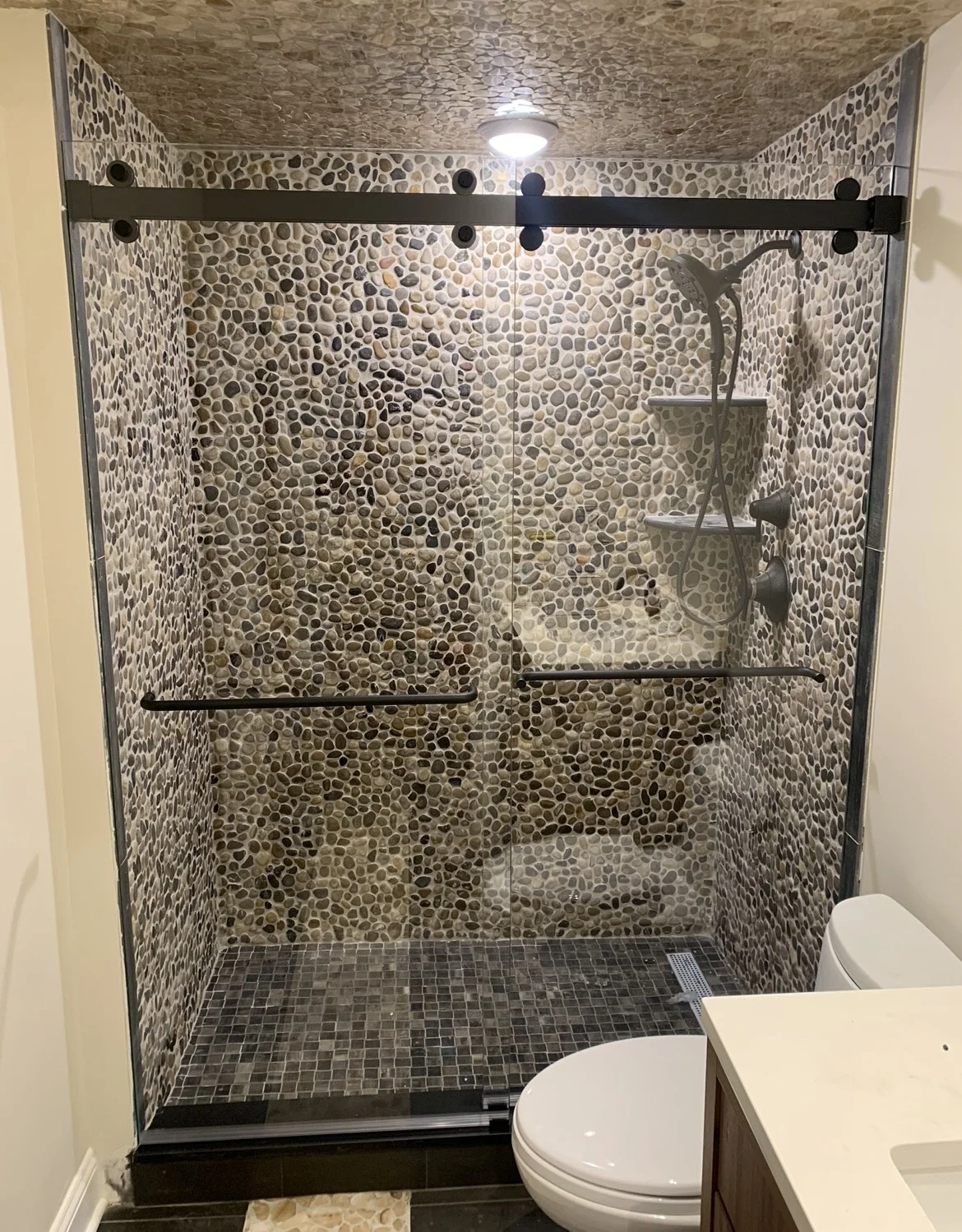
A semi frameless shower door is made with thick tempered glass and a limited amount of metal framing. Unlike a fully framed enclosure, it does not have metal around every edge of the glass. However, it still uses supports such as wall channels, hinges, headers, or framing around the fixed panels. It offers a modern appearance, reliable stability, and a more affordable price than many fully frameless systems.
A shower enclosure plays an important role in both the appearance and function of a bathroom. It keeps water inside the shower, provides privacy, and contributes to the overall design of the space. Homeowners can choose from several enclosure styles, but semi frameless shower doors have become particularly popular in modern bathrooms.
A semi frameless shower door combines elements of framed and frameless construction. It usually has exposed glass edges around the moving door, while selected parts of the enclosure are supported by metal channels or framing. The exact configuration can vary depending on the shower layout, glass thickness, hardware, and installation method.
This hybrid design creates a cleaner appearance than a traditional framed enclosure without requiring the heavier glass and specialized hardware normally associated with a fully frameless system. It is a practical middle option for homeowners who want contemporary styling while keeping their remodeling budget under control.
How Does a Semi Frameless Shower Door Work?
Semi frameless shower enclosures use tempered safety glass supported by strategically positioned metal components. Instead of surrounding every glass panel with a complete aluminum frame, the system leaves certain edges exposed.
A typical enclosure may have a framed perimeter around the fixed panels but no metal frame around the actual door. Another design may use wall channels and a top header while leaving the vertical edges of the glass exposed. Some models have a framed base to help control water while maintaining a relatively open appearance above it.
The metal components provide structural support and help secure the glass to the walls. Hinges, handles, rollers, brackets, and seals allow the door to move safely while minimizing water leakage.
Because semi frameless is a broad design category, two doors carrying that description may look quite different. Homeowners should inspect the actual hardware, framing, and glass configuration instead of relying only on the product label.
Semi Frameless vs. Framed Shower Doors
A framed shower enclosure uses metal around nearly every edge of the glass. The door, fixed panels, perimeter, and joints are normally supported by aluminum framing. Because the frame provides much of the structural strength, framed doors can use thinner and lighter glass.
Framed shower doors are usually economical and effective at controlling water. However, their prominent metal sections can make the bathroom look busier or more enclosed. Tracks and overlapping components can also collect soap residue, mineral deposits, and moisture.
A semi frameless enclosure reduces the amount of visible metal. It may still use a header, base track, or wall channels, but the door itself often has uncovered glass edges. This produces a lighter and more contemporary appearance.
The main differences include:
Feature | Framed Shower Door | Semi Frameless Shower Door |
Visible metal | Metal surrounds most glass edges | Metal appears only in selected areas |
Glass thickness | Usually thinner | Usually thicker |
Overall appearance | Traditional and structured | Cleaner and more modern |
Water control | Generally excellent | Very good when correctly installed |
Cleaning | More tracks and corners to clean | Fewer metal sections and crevices |
Cost | Usually the least expensive | Midrange option |
Customization | Often based on standard sizes | More design flexibility |
Semi Frameless vs. Frameless Shower Doors
Fully frameless shower doors use thick tempered glass as the primary structural material. Rather than relying on a continuous metal frame, they are installed with discreet hinges, clamps, brackets, and handles. This creates an open and nearly uninterrupted glass appearance.
A semi frameless enclosure retains more metal support. It may include wall channels, a header, or framing around stationary panels. These components can make installation more forgiving and reduce the amount of heavy glass required.
Frameless doors usually provide the most luxurious appearance, but they often cost more because of their thicker glass, specialized hardware, detailed measurements, and precision installation. Semi frameless doors achieve a similar visual effect at a more accessible price.
Feature | Semi Frameless | Fully Frameless |
Metal framing | Limited framing or channels | No continuous perimeter frame |
Glass thickness | Moderate to thick | Generally thicker |
Visual effect | Modern and streamlined | Open and highly luxurious |
Installation | Precise but more forgiving | Requires exceptional precision |
Water sealing | Strong sealing options | May have small functional gaps |
Price | Moderate | Usually higher |
Hardware | Channels, headers, hinges, or rollers | Minimal brackets, hinges, and clamps |
Main Components of a Semi Frameless Enclosure
Understanding the individual components can help homeowners compare products more accurately.
Tempered Safety Glass
The panels are made from tempered glass designed for use in wet and high-traffic environments. Tempering increases strength and changes how the glass behaves if it breaks. Instead of forming large, sharp pieces, it breaks into many smaller fragments.
The glass used in a semi frameless system is generally thicker than glass used in a completely framed enclosure. The required thickness depends on the size, shape, hardware, and level of structural support.
Wall Channels
Wall channels are narrow metal sections that secure glass panels to bathroom walls. They provide support and can accommodate minor variations in wall alignment. Channels may be installed on one or both sides of the enclosure.
Header or Support Bar
Some semi frameless systems use a metal header across the top. The header helps support the door and fixed panels. Sliding models may use the upper section to hold or guide the rollers.
Hinges and Rollers
Swinging doors use hinges attached to a wall, frame, or adjacent glass panel. Sliding doors use rollers that travel along a track. Quality hardware helps the door move smoothly and remain correctly aligned.
Handles and Towel Bars
Handles are available in numerous shapes, finishes, and sizes. Depending on the design, an external handle may be paired with an interior knob. Some enclosures can also accommodate a towel bar.
Seals and Sweeps
Clear vinyl seals and bottom sweeps help direct water back into the shower. Their placement depends on the door configuration. These components may eventually wear out, but they can usually be replaced without replacing the entire enclosure.
Different Types of Semi Frameless Shower Doors
Semi frameless enclosures are available in several configurations. The best style depends on the bathroom layout, entrance width, shower size, and available clearance.
Hinged Shower Doors
A hinged door swings outward, although some hardware allows movement in both directions. Hinged doors provide a wide and comfortable entrance, making them popular for walk-in showers.
They require sufficient floor space outside the enclosure. The door should not strike a toilet, vanity, radiator, or another fixture when opened.
Pivot Shower Doors
Pivot doors rotate on pivot points positioned near the top and bottom. The pivot can be placed slightly inward from the edge, allowing part of the glass to move into the shower as the door opens.
This design can reduce the amount of outward clearance required. Pivot doors work well in bathrooms where a traditional edge-mounted hinge would be less practical.
Sliding Shower Doors
Sliding doors move along tracks and do not require outward opening space. They are commonly installed on bathtubs and wide shower openings.
A semi frameless sliding system uses less metal than a conventional framed bypass enclosure. The rollers and streamlined rails can create a more refined appearance while maintaining practical everyday operation.
Corner Enclosures
Corner showers may use two or more glass panels to form a square, rectangular, or angled enclosure. Semi frameless construction provides useful support for the panels while preserving an open visual effect.
Neo-Angle Enclosures
A neo-angle enclosure typically fits into a corner and has an angled front. The door is often positioned between two fixed glass panels. This configuration can save floor space while creating a defined shower area.
Bathtub Shower Doors
Semi frameless glass panels can replace shower curtains above a bathtub. Sliding doors are a common choice, but hinged configurations may also work in suitable spaces.
Glass creates a more permanent and polished appearance than a curtain. It can also make a smaller bathroom feel less divided.
Benefits of a Semi Frameless Shower Door
Clean and Contemporary Appearance
Reduced framing allows more of the glass to remain visible. The result is a cleaner design that works particularly well in modern and transitional bathrooms.
The enclosure does not visually divide the room as heavily as a traditional framed system. Decorative tile, stonework, niches, and fixtures remain easier to see.
Lower Cost Than Many Frameless Systems
Semi frameless doors usually cost less than fully frameless enclosures. They may use moderately thick glass and less expensive support methods while still providing an upscale appearance.
For homeowners balancing design and budget, this combination is often the strongest reason to choose semi frameless construction.
Better Stability
Wall channels, headers, and other structural elements support the glass. This added reinforcement can be valuable in large enclosures or bathrooms with walls that are not perfectly level.
Easier Cleaning Than Framed Enclosures
A reduced amount of framing means fewer tracks, joints, and corners where residue can accumulate. Exposed glass surfaces are generally easier to wipe down with a squeegee.
Semi frameless enclosures still contain seals and metal components, so they are not maintenance free. However, routine cleaning is usually simpler than with heavily framed doors.
Flexible Design Options
These doors are available in swinging, pivoting, sliding, and corner configurations. Homeowners can also select from different glass patterns and hardware finishes.
Popular finishes include chrome, brushed nickel, matte black, brass, bronze, and stainless steel. Coordinating the shower hardware with faucets and cabinet handles helps create a unified bathroom design.
Improved Sense of Space
Glass allows light to travel throughout the bathroom. This can make a small or narrow room feel larger and less confined.
Clear glass provides the most open appearance. Frosted or patterned glass offers additional privacy but may slightly reduce the visual sense of space.
Potential Disadvantages to Consider
It Is Not Completely Frameless
Homeowners expecting an enclosure with almost no visible metal may be disappointed. Wall channels, headers, or tracks will remain visible, depending on the model.
Reviewing drawings or product photographs before purchasing can prevent misunderstandings about the finished look.
Water Can Escape Through Gaps
Every shower enclosure requires proper planning to control water. Small gaps may exist around hinges, door edges, and seals. Directing a high-pressure showerhead toward these areas can result in water escaping.
Accurate measurements, suitable seals, and correct placement of the showerhead help reduce leakage.
Tracks and Seals Still Require Cleaning
Although there is less framing than in a traditional enclosure, semi frameless systems may still include channels or tracks. These areas can collect water, soap, and mineral deposits.
Regular cleaning prevents buildup and helps protect the finish.
Professional Installation Is Often Necessary
Glass doors are heavy and measurements must be highly accurate. Incorrect drilling, poor alignment, or uneven support can affect safety and performance.
Professional installation is particularly important for large panels, custom layouts, tiled walls, and doors attached to adjacent glass.
Glass Choices and Privacy Options
Clear glass is the most common choice because it highlights tilework and makes the bathroom appear open. However, it also shows water spots and provides limited privacy.
Low-iron glass has reduced green coloration and offers exceptional clarity. It works well when the shower contains light-colored stone, white tile, or detailed patterns that should appear true to color.
Frosted glass obscures the view and provides greater privacy. Textured, rain-patterned, and decorative glass can also hide water marks more effectively than clear glass.
Tinted glass introduces color and visual depth. Gray and bronze are common options, but they can make an already dark bathroom feel more enclosed.
The right choice depends on privacy preferences, lighting, maintenance expectations, and the surrounding materials.
How Much Does a Semi Frameless Shower Door Cost?
The cost varies considerably because shower openings and enclosure designs are different. A standard-sized door usually costs less than a custom enclosure with multiple panels, unusual angles, premium glass, and designer hardware.
Important cost factors include:
- Dimensions of the shower opening
- Number and size of glass panels
- Glass thickness and type
- Hinged, pivoting, or sliding operation
- Hardware style and finish
- Custom fabrication requirements
- Wall and floor conditions
- Removal of an existing enclosure
- Local installation labor rates
A semi frameless door generally occupies the middle price range. It costs more than a basic framed model but less than many custom frameless enclosures. Homeowners should compare complete installed estimates because a low product price may exclude measurement, delivery, removal, hardware, or labor.
Measuring and Installation Requirements
Precise measurements are essential. Installers normally measure the width at multiple heights because walls may lean inward or outward. They also check whether the curb, tub edge, and walls are level and plumb.
Tile should usually be completed before final measurements are taken. Even a small change in tile thickness can affect the glass dimensions and hardware position.
The installer must also determine whether adequate structural backing exists behind the finished wall. Heavy doors and panels cannot be safely attached to weak surfaces or tile alone in every situation.
Custom tempered glass cannot be cut or drilled after tempering. Therefore, hinge holes, handle holes, and panel dimensions must be confirmed before manufacturing begins. A measurement error may require an entirely new panel.
Working with an experienced installer such as M&N Frameless Shower Doors LLC can help ensure the enclosure is measured, fabricated, aligned, and sealed for reliable daily use.
How to Maintain a Semi Frameless Shower Door
Good maintenance keeps the glass clear and protects the hardware.
Use a squeegee after showering to remove water from the glass. This simple habit reduces mineral deposits, soap film, and spotting. Leave the door open when practical so moisture can evaporate.
Clean the glass regularly with a product approved for shower enclosures. Avoid abrasive pads, harsh powders, and aggressive chemicals that could scratch the glass or damage metal finishes.
Pay attention to the bottom sweep and vertical seals. Clean them carefully and replace them if they become brittle, cracked, loose, or discolored. Check screws and handles periodically, but do not overtighten hardware attached to glass.
Bathrooms with hard water may require more frequent cleaning. A protective glass coating can reduce buildup, although it does not eliminate the need for maintenance.
Is a Semi Frameless Shower Door Right for Your Bathroom?
A semi frameless enclosure is a strong choice when you want a modern glass shower without paying the full price of a custom frameless installation. It is also useful when the shower layout benefits from additional structural support.
It may be right for your bathroom if:
- You prefer minimal but visible metal framing
- You want easier cleaning than a framed enclosure
- A fully frameless system exceeds your budget
- You need a sliding or space-saving configuration
- You want to display decorative shower tile
- You value stability and practical water control
- You want several glass and hardware options
A fully frameless door may be more suitable if the cleanest possible appearance is your highest priority and the budget allows for thicker glass and custom hardware. A framed door may be preferable when affordability and maximum water containment matter more than minimalist styling.
Common Buying Mistakes
One common mistake is choosing a door based only on photographs. Product labels can be inconsistent, so homeowners should confirm exactly which glass edges will have metal around them.
Another mistake is purchasing the enclosure before the shower walls and curb are finished. Final surfaces can change the opening dimensions.
Ignoring door clearance can also create problems. A swinging panel needs enough room to open without hitting nearby fixtures. For compact bathrooms, a sliding or inward-pivoting design may work better.
Choosing hardware based only on appearance is equally risky. Components must support the size and weight of the glass. Suitable hardware combines visual appeal with correct load capacity and corrosion resistance.
Finally, focusing only on the initial price may lead to an unsuitable decision. Installation quality, glass specifications, warranties, replacement parts, and long-term maintenance all affect the real value of the enclosure.
Final Thoughts
A semi frameless shower door combines the reliable support of a framed enclosure with much of the clean appearance associated with frameless glass. Selected channels, headers, or supports stabilize the system, while exposed glass edges create a lighter and more contemporary finish.
It offers an attractive balance of cost, appearance, durability, and function. With accurate measurements, appropriate glass, quality hardware, and professional installation, a semi frameless enclosure can improve both the everyday usability and visual appeal of a bathroom.


