
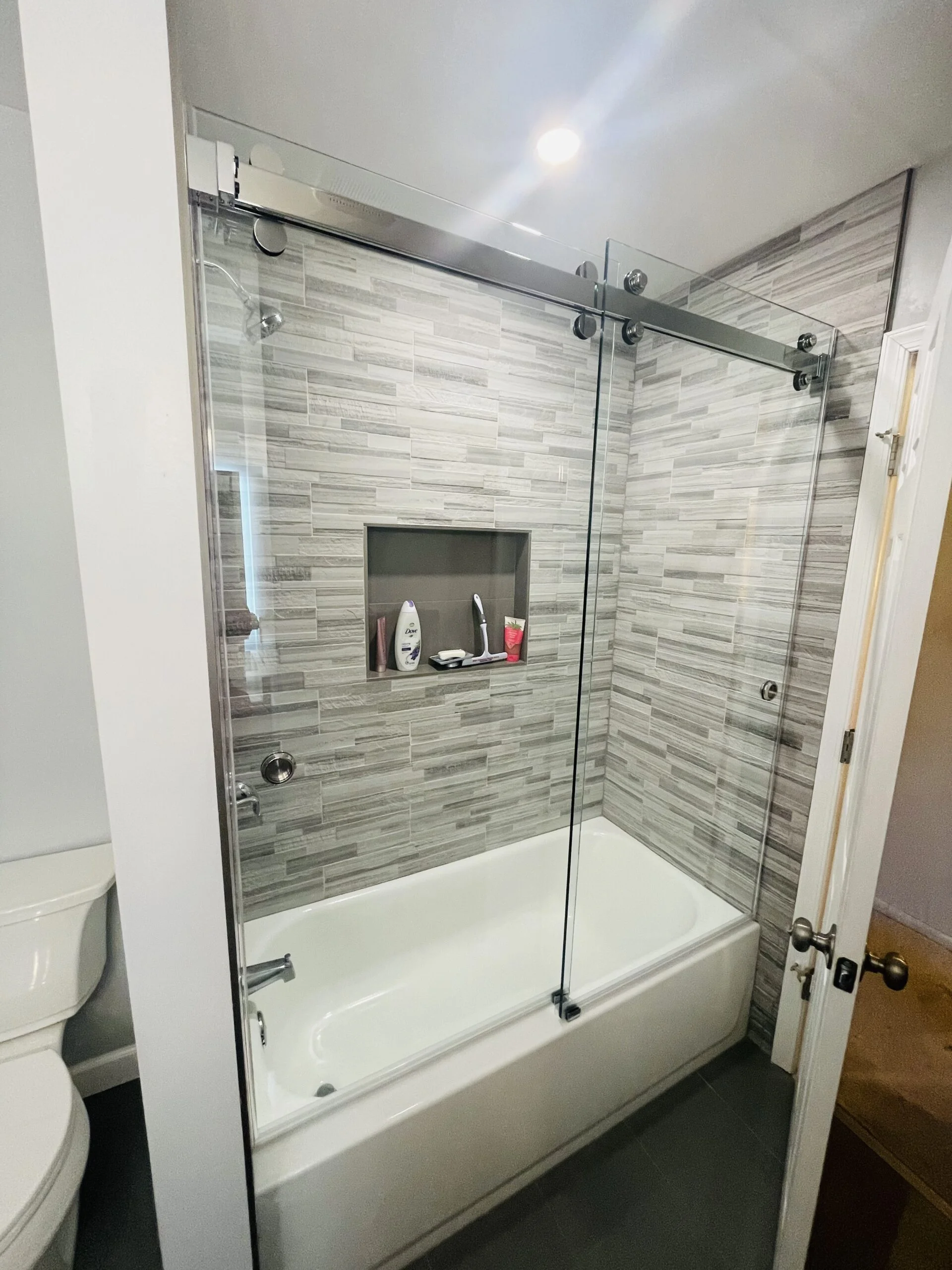
To install a frameless sliding shower door, measure and mark the shower area, install the top track and bottom guide, attach rollers to the glass panels, hang the glass panels, and apply silicone sealant along the edges for a secure, leak-free finish.
Frameless sliding shower doors have become a popular choice for modern bathrooms due to their sleek design, minimal hardware, and ability to make spaces feel larger and more open. Unlike traditional framed doors, frameless designs offer a seamless look and are easier to clean. However, installing a frameless sliding shower door requires precision, proper tools, and careful planning. If done incorrectly, it can result in leaks, misalignment, or even safety hazards.
In this comprehensive guide, we will walk you through installing a frameless sliding shower door, explain the materials you need, and provide expert tips to achieve a professional finish.
Understanding Frameless Sliding Shower Doors
Frameless sliding shower doors are made from thick tempered glass, usually between 3/8 and 1/2 inch thick. They slide along a top track mounted on the wall or ceiling, and a bottom guide provides smooth, stable movement. Unlike framed doors, frameless doors lack a full metal border, giving them a minimalist aesthetic that complements contemporary bathroom designs.
Before installation, it is important to measure your shower area accurately. Small miscalculations can lead to improper fitting, water leakage, or uneven sliding.
Tools and Materials Needed
Before starting, gather the following tools and materials:
- Measuring tape
- Level
- Pencil or marker
- Drill with masonry and wood bits
- Screwdriver
- Silicone sealant
- Rubber mallet
- Shims
- Safety glasses and gloves
- Framing anchors (if needed)
- The frameless sliding shower door kit, including glass panels, top track, bottom guide, rollers, and door handles
Having everything on hand will make the installation process smoother and reduce the risk of errors.
Step 1: Prepare the Shower Area
Start by thoroughly cleaning the shower walls and floor. Remove any old caulking, debris, or dirt to ensure a solid surface for mounting the hardware.
Check the walls for level and plumb. Use a level to confirm that the walls are straight. Any unevenness may require shims to correct, as frameless doors require precise alignment for proper sliding and sealing.
Step 2: Measure and Mark
Accurate measurements are critical for frameless sliding doors. Measure the width of the shower opening at the top, middle, and bottom to ensure consistency.
Mark the positions of the top track and bottom guide on the walls with a pencil. Make sure these marks are level and correspond with the manufacturer’s instructions. Incorrect markings can misalign the door and compromise its operation.
Step 3: Install the Top Track
The top track is the key structural component that supports the sliding doors. Use a drill to create pilot holes for the mounting screws, ensuring they align with studs or anchors.
Secure the track with screws, and double-check that it is perfectly level. Even a slight tilt can cause the doors to slide improperly or stick during operation.
Step 4: Install the Bottom Guide
The bottom guide keeps the doors aligned and prevents lateral movement. Position the bottom guide according to the earlier marks, ensuring it aligns with the top track.
Use silicone sealant underneath the guide to create a water-resistant seal, and screw it into place. A properly installed bottom guide is essential for smooth sliding and leak prevention.
Step 5: Attach Rollers to the Glass Panels
Most frameless sliding doors use rollers at the top of the glass panels to glide along the track. Attach these rollers carefully according to the manufacturer’s instructions.
Handle the glass panels with care to avoid chips or cracks. It is recommended to have a helper during this step due to the glass’s weight and fragility.
Step 6: Hang the Glass Panels
With assistance, lift the glass panels and insert the rollers into the top track. Ensure the panels slide smoothly, are level, and are aligned with the bottom guide.
Test the sliding action several times to check for smooth movement. Adjust rollers if necessary to correct alignment or height differences.
Step 7: Install Handles and Accessories
Once the glass panels are securely in place, install the door handles and any additional accessories included in your kit. Follow the manufacturer’s instructions carefully to ensure that all fittings are secure.
Check for loose screws or misaligned handles before proceeding to sealing.
Step 8: Seal the Edges
Apply a thin bead of clear silicone sealant along the edges where the glass meets the wall and the bottom guide. This step is crucial for preventing water leakage and maintaining a clean finish.
Smooth the silicone with a wet finger or a finishing tool for a neat, professional look. Allow the sealant to cure according to the manufacturer’s recommended time before using the shower.
Step 9: Final Checks
After installation, perform a final inspection:
- Ensure doors slide smoothly without sticking
- Verify that the panels are level and plumb
- Check that the bottom guide is properly aligned
- Confirm that silicone sealant is applied consistently
A properly installed frameless sliding shower door will glide effortlessly, maintain a tight seal, and enhance the overall appearance of your bathroom.
Maintenance Tips for Longevity
Regular maintenance helps keep your frameless sliding shower door functioning properly. Clean the glass panels with a non-abrasive cleaner to prevent soap scum buildup. Check the rollers periodically for wear, and tighten screws or bolts as needed. Replace worn seals or sweeps to maintain a watertight seal.
By following these steps and performing routine maintenance, you can enjoy a beautiful, leak-free frameless sliding shower door for years to come.
M&N Frameless Shower Doors LLC specialize in providing high-quality materials and expert installation services. Working with experienced professionals can save time and ensure that your door is installed safely and correctly.
Final Thoughts
Installing a frameless sliding shower door may seem intimidating, but with careful planning, proper tools, and attention to detail, it is achievable for skilled DIYers or with professional assistance. Accurate measurements, correct alignment, and proper sealing are the keys to a successful installation.
By following the step-by-step guide outlined above, you can achieve a sleek, modern, and fully functional frameless sliding shower door that elevates your bathroom design while keeping it water-resistant and easy to maintain.
Frequently Asked Questions
While DIY installation is possible, professional help ensures proper alignment, sealing, and safety.
Installation typically takes 2–4 hours for experienced installers, depending on shower size and complexity
Yes, frameless doors can be installed on tiled walls using anchors or screws designed for masonry or tile.
Proper sealing with silicone along edges, correct bottom guide installation, and alignment are key to preventing leaks.
You will need a level, a drill, a screwdriver, a measuring tape, shims, silicone sealant, a rubber mallet, and safety equipment.


